


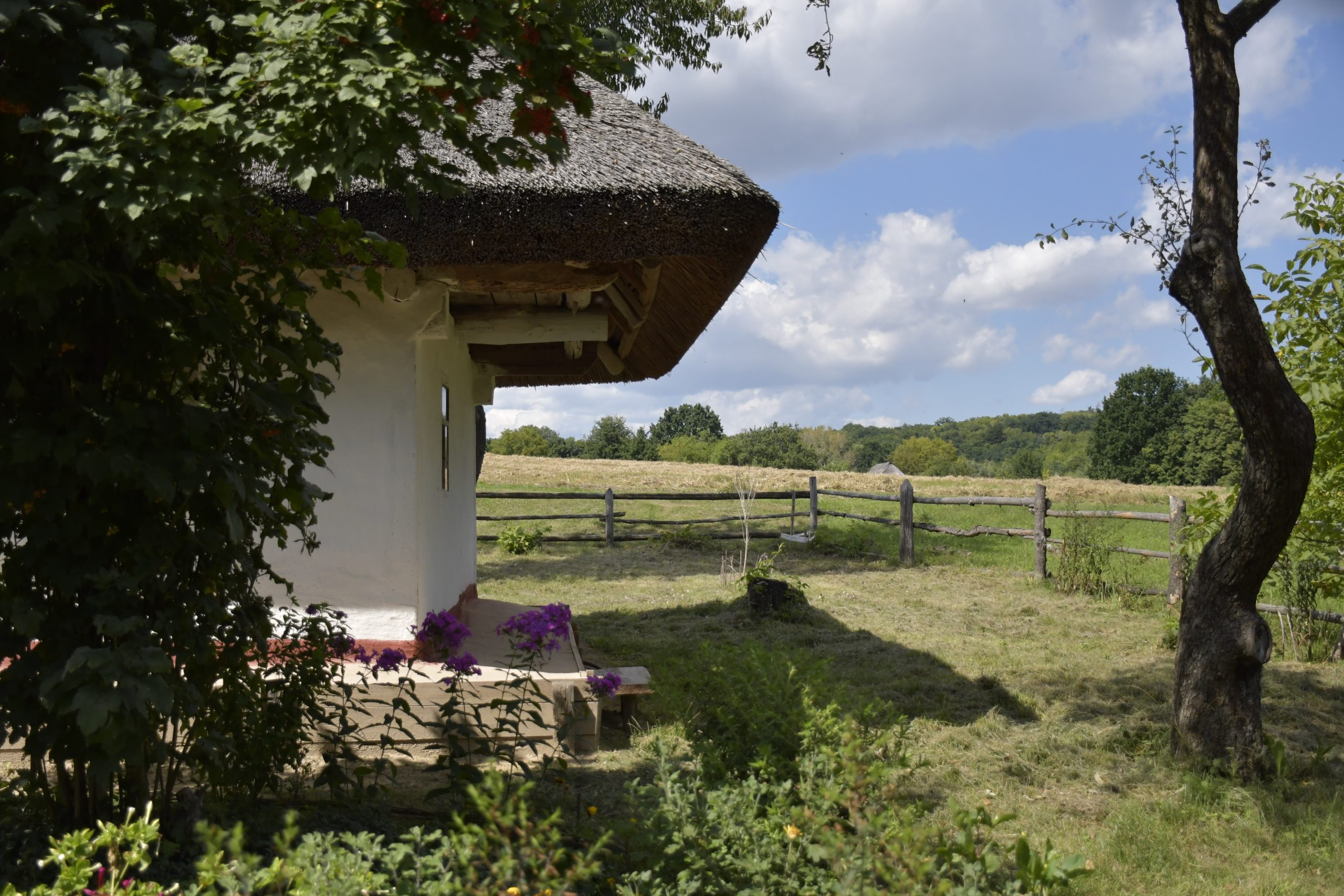
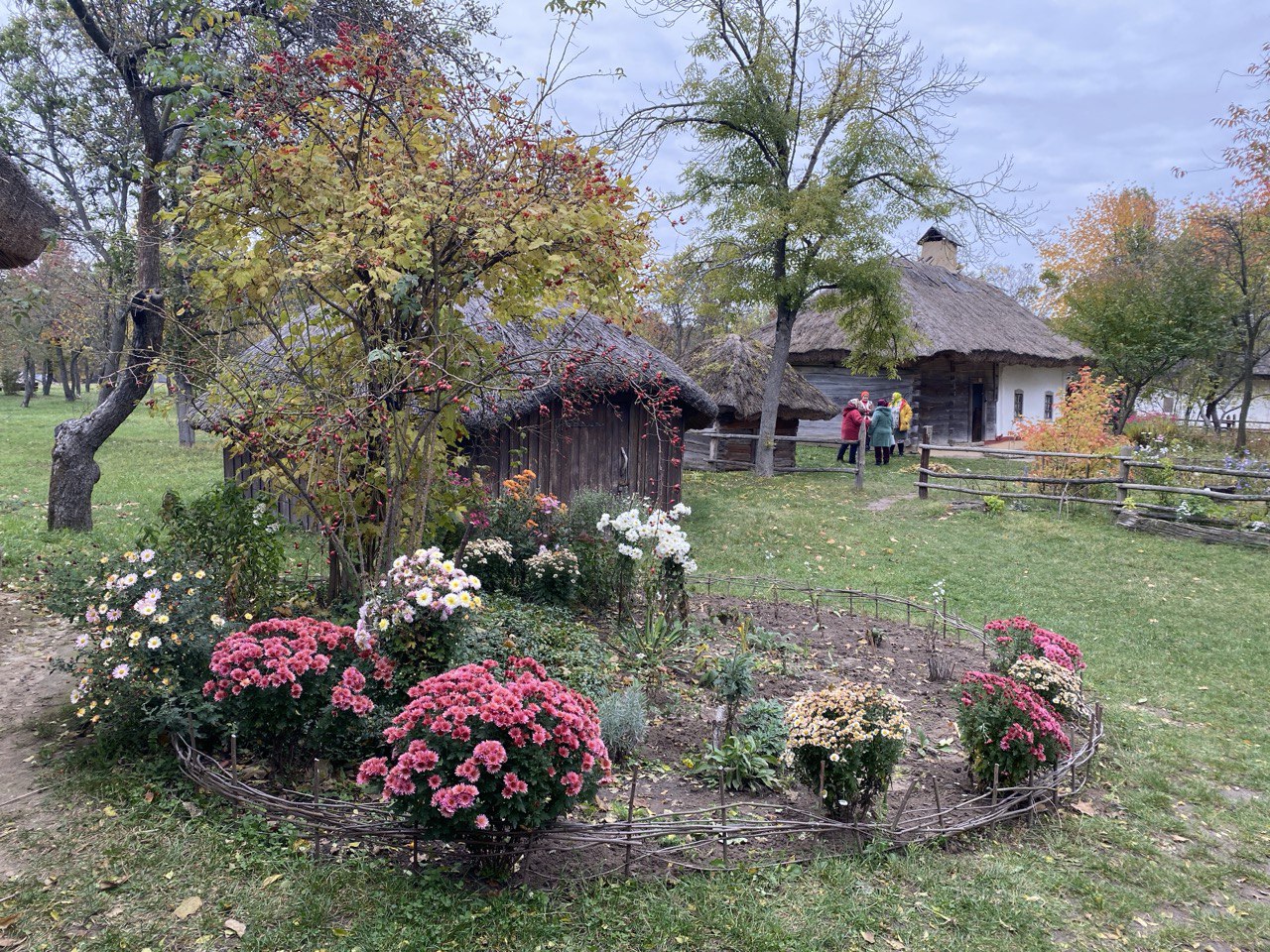
Poltavshchyna is often regarded as the heart of “classical” Ukraine and a major source of its artistic tradition. It is a land where everyday life and beauty have always been inseparable. While other regions became known for woodcarving or stonework, this area has long been, above all, the homeland of potters. It is here that Opishnia — the capital of Ukrainian ceramics — is located, a craft that grew into a true cultural phenomenon and shaped the identity of the region. Another hallmark of Poltavshchyna is Reshetylivka, which gave the world the famous “white-on-white” embroidery. This delicate, lace-like technique resembles intricate frost patterns on winter windows. Such refinement is visible throughout the region. Villages are known for their distinctive elegance: houses were not merely whitewashed but often decorated with bright floral frescoes on façades, shutters, and doors. These dwellings were not just places to live, but artistic statements reflecting the aesthetic tastes of their owners. The same spirit prevailed inside the homes. Interiors expressed both prosperity and a deep striving for harmony. At the heart of the house stood a richly decorated stove — its true centerpiece. Every object, whether an embroidered towel or a ceramic jug from Opishnia, was both a practical household item and a work of art.
Locations
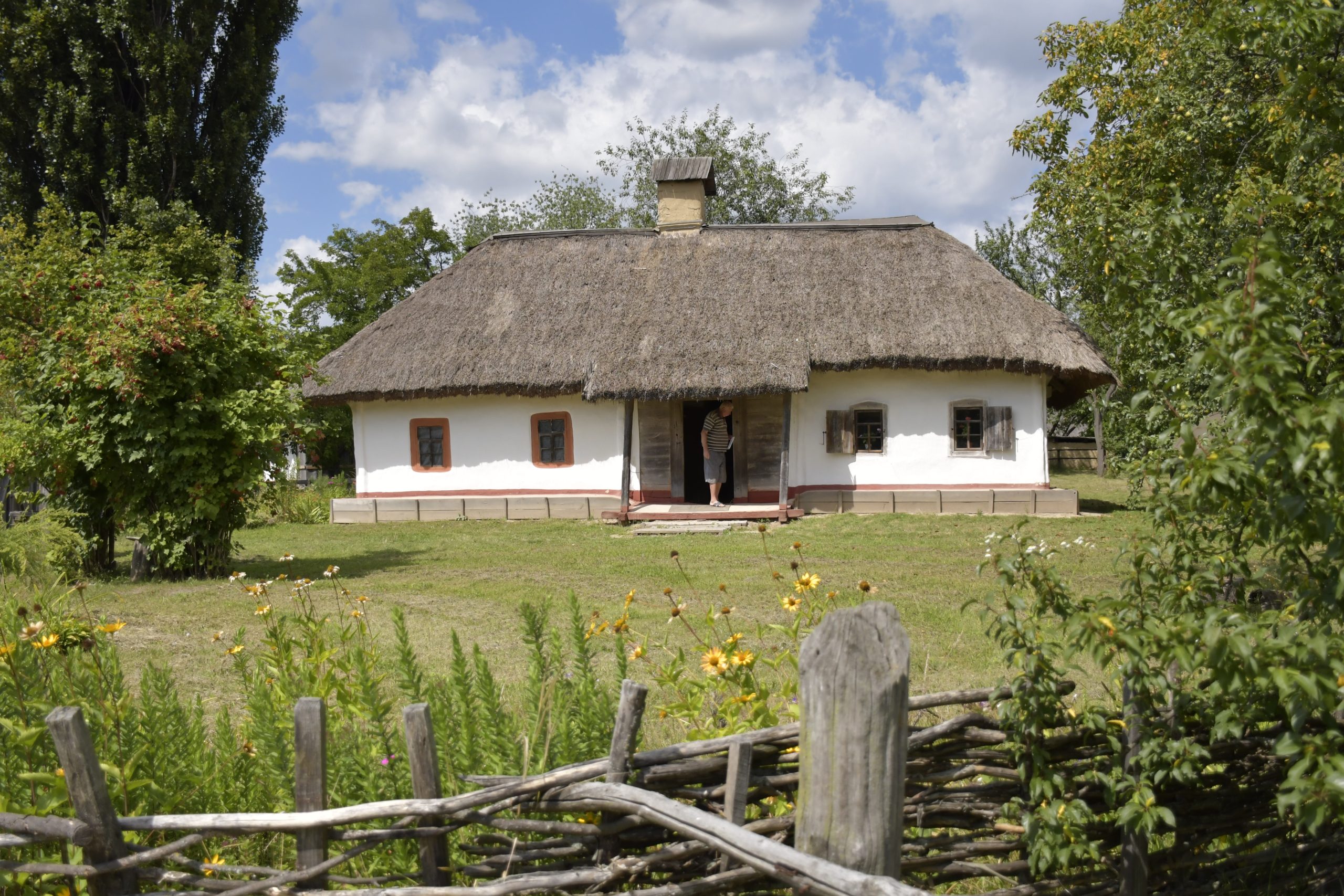
House from the Village of Popivka
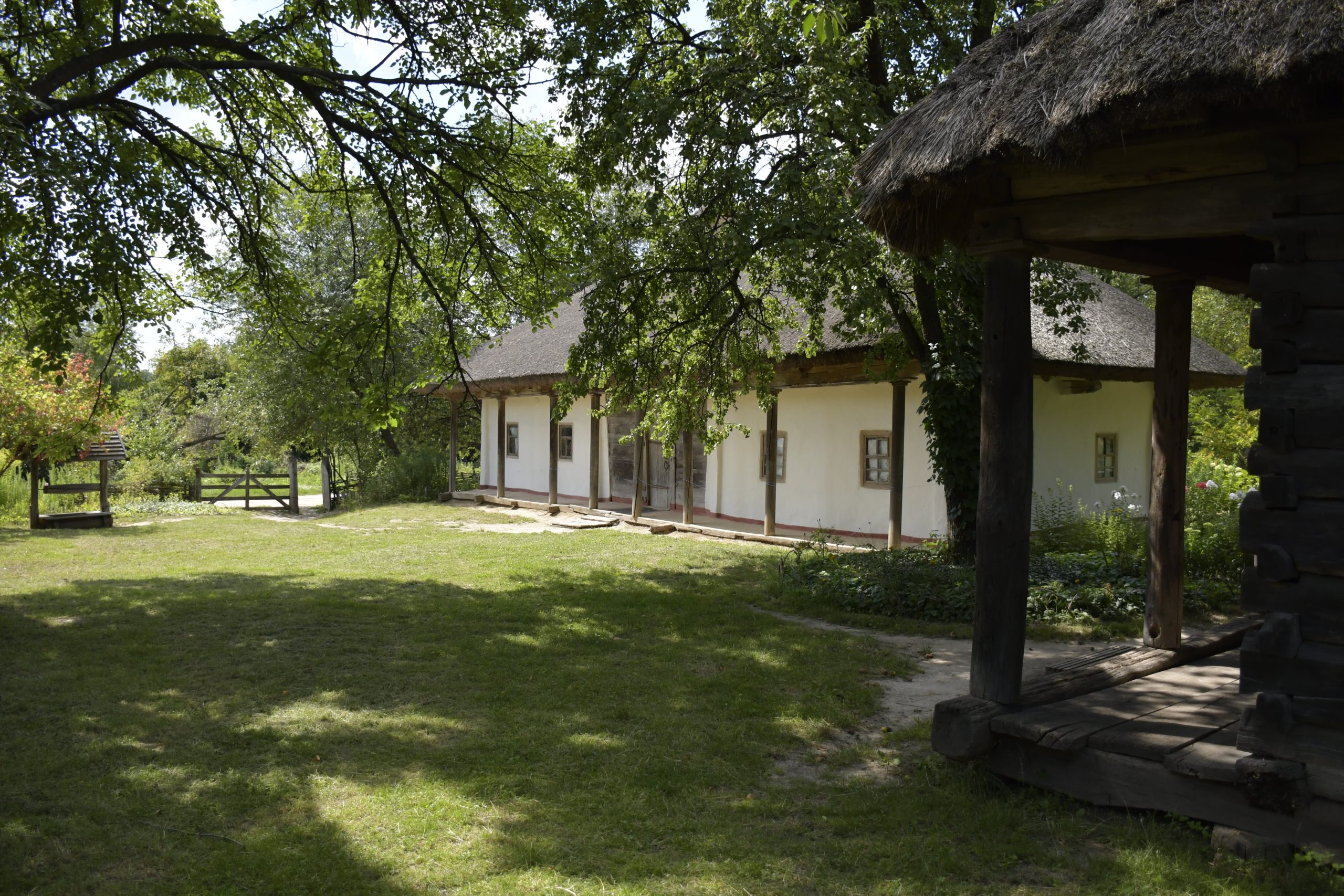
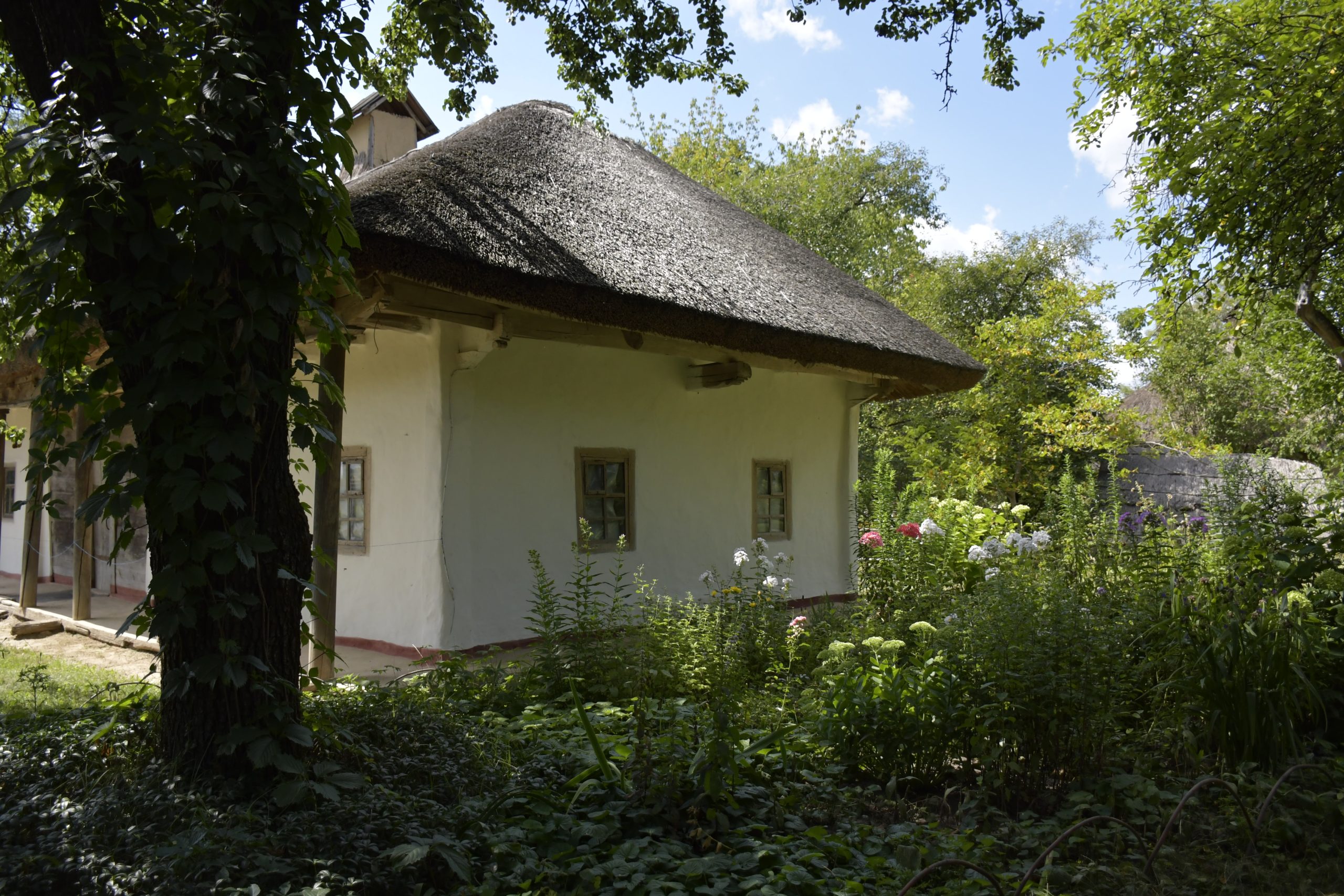
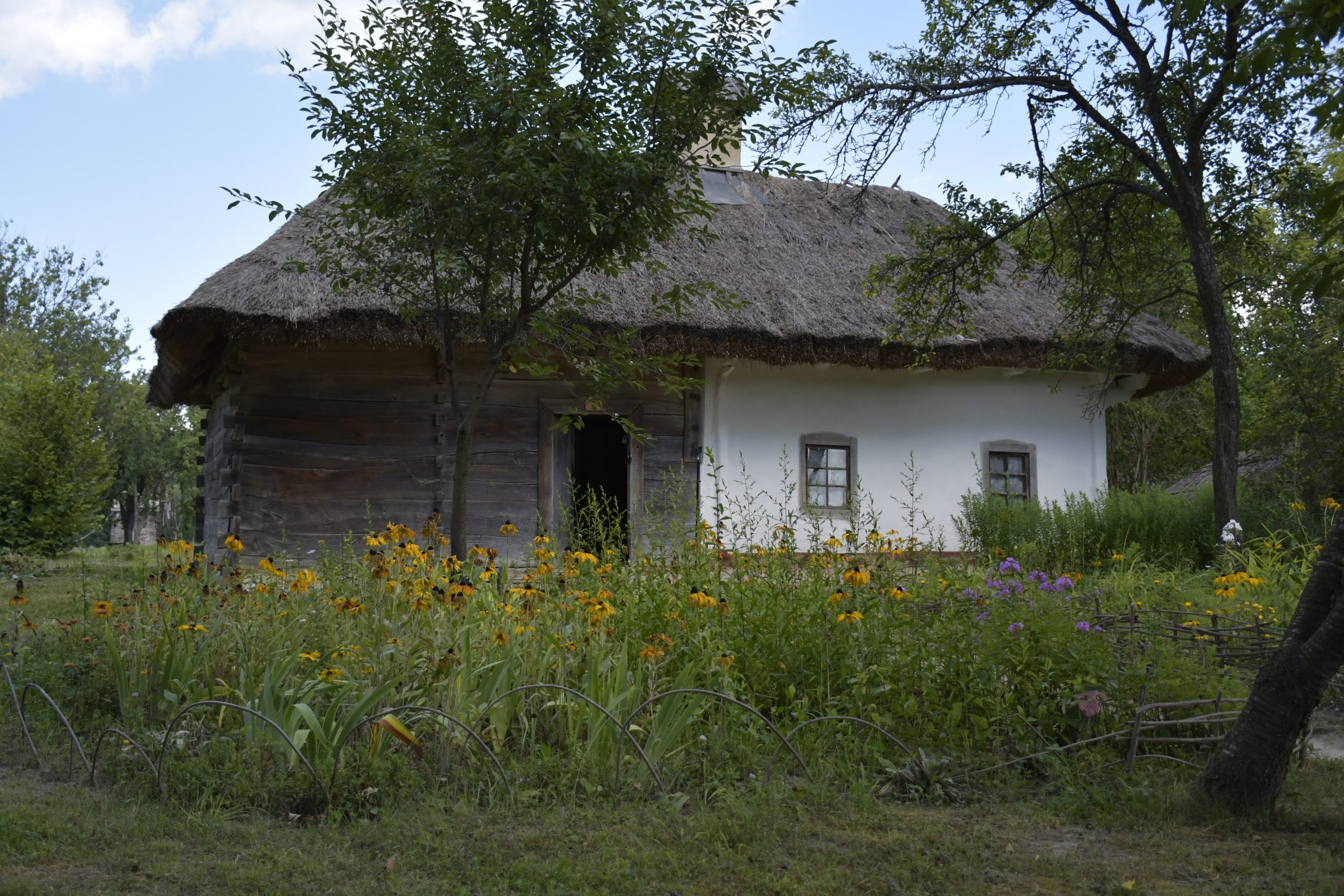
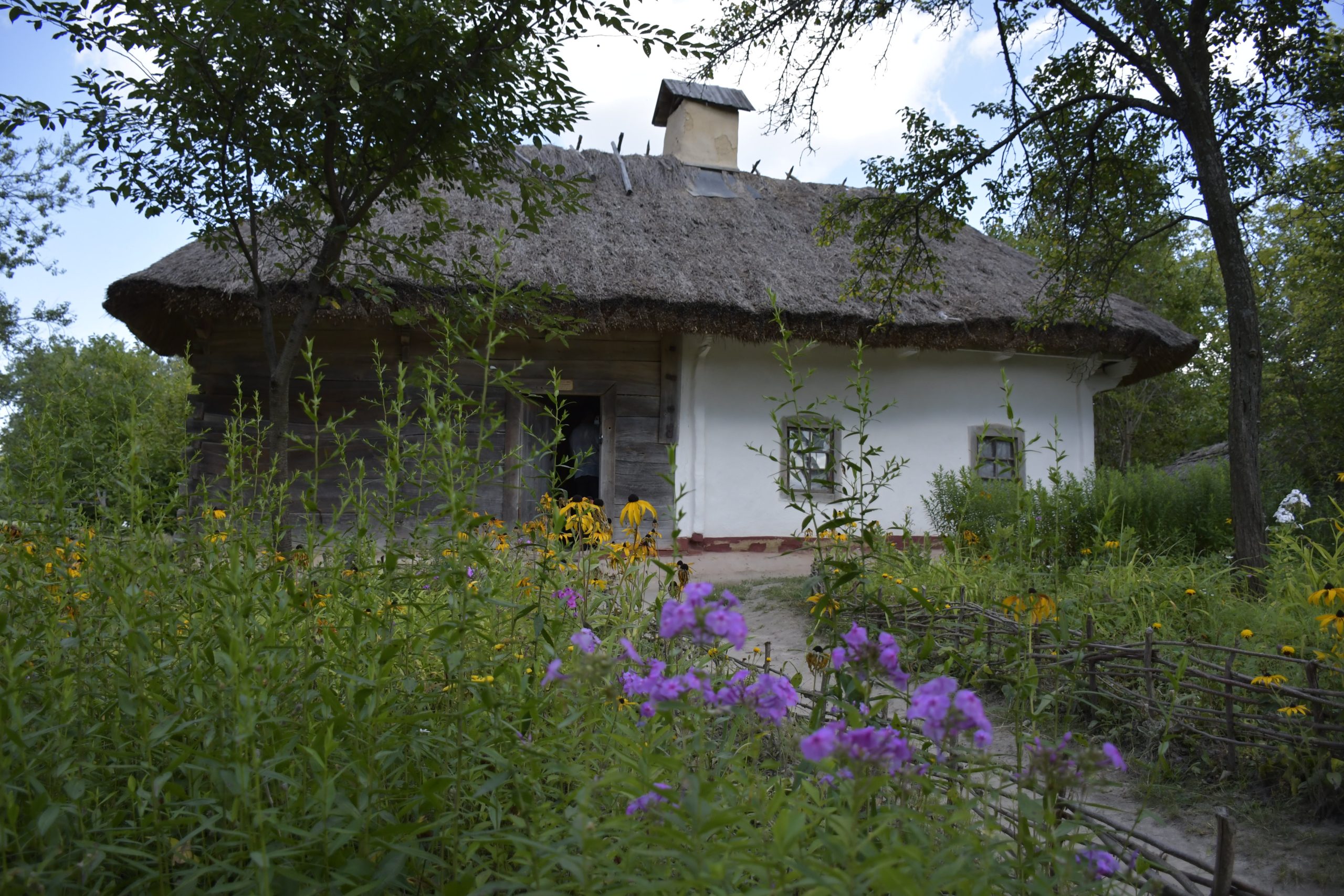
This is the house of a peasant farmer from the village of Popivka in the Zinkiv District of Poltava Oblast. It was built in the second half of the 19th century. The house is log-built from linden wood, set on an oak foundation, with a roof thatched with rye straw.
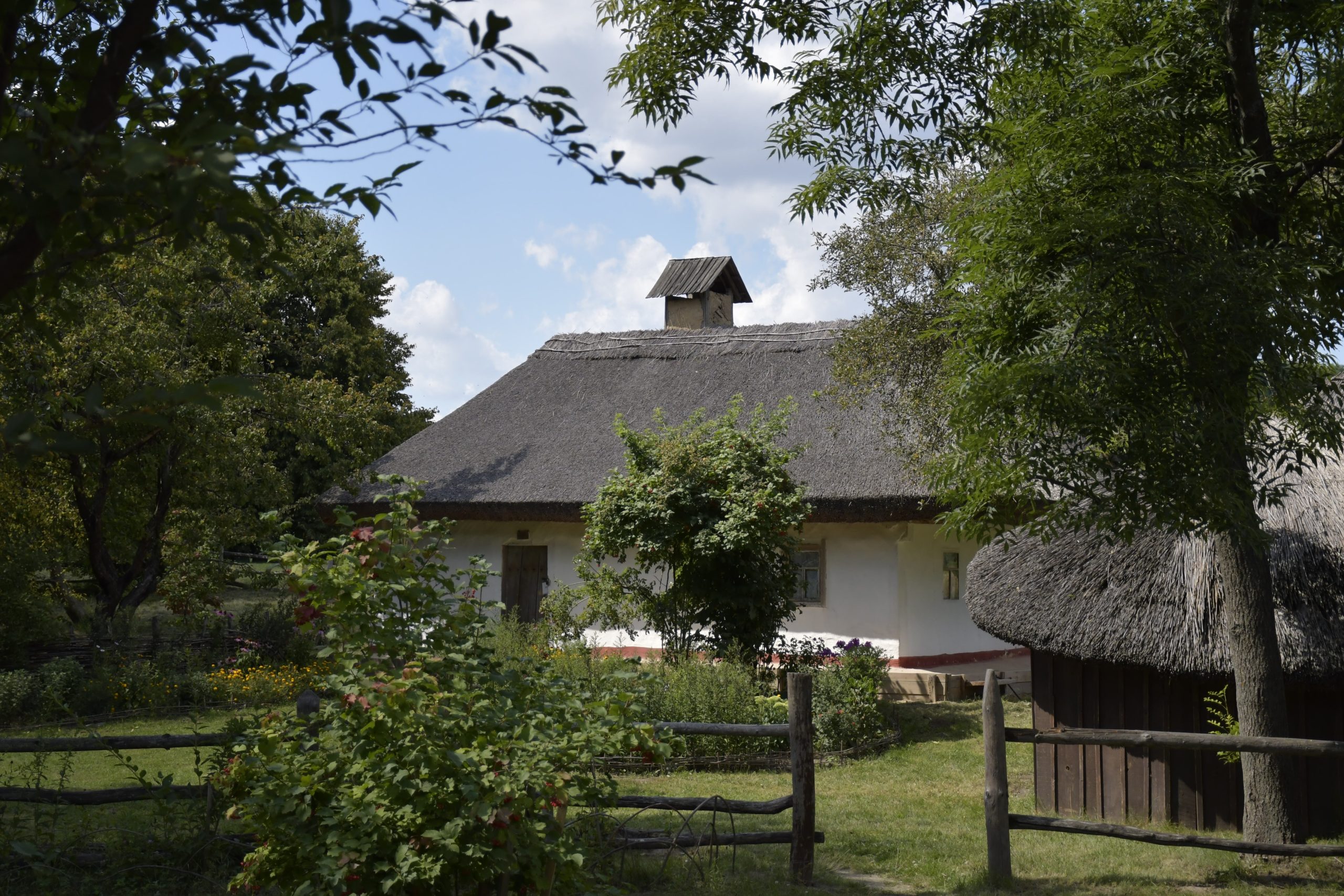
House from the Village of Revazivka
This house comes from the village of Revazivka in Poltava Oblast and dates to the mid-19th century. The building is very simple in construction. Its walls are made of willow posts driven into the ground, interwoven with vines and reeds, and coated with clay — a technique typical of modest rural dwellings of the period.